If you live in Valencia, Stevenson Ranch, or most of the newer Saugus and Castaic tracts, your association almost certainly has a view on window film. The good news is that the view is narrower than people assume, and virtually every rejection we've seen traces back to a single number that's easy to check before you submit anything.
What associations actually care about
Architectural committees are not, in general, trying to stop you making your house habitable in August. Their concern is almost entirely how the building looks from the street and whether one house ends up visually inconsistent with the rest of the tract.
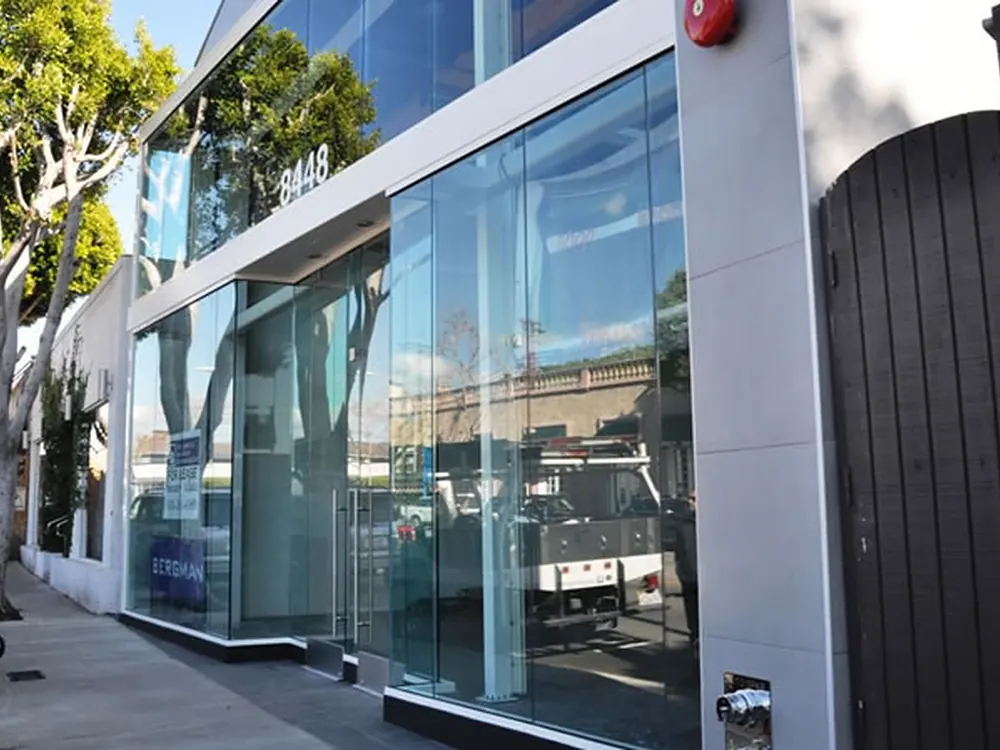
In practice that reduces to two properties: exterior reflectivity, and colour or tone shift. A film that makes your windows read as mirrors from the kerb will be rejected by nearly every association in this valley. A film that leaves them looking like windows almost never is, regardless of how much heat it rejects on the inside.
The number that decides it
Exterior visible reflectance is the figure to ask for, usually expressed as a percentage. Untreated clear glass sits around 8%. Most modern ceramic films land in a broadly similar range, which is exactly why they pass — they don't materially change how the elevation reads.
Traditional metallised and dual-reflective films are where trouble begins. They can push exterior reflectance far higher, which is what gives them their strong performance and their daytime privacy, and what a committee will object to. If a quote proposes one of these on a street-facing elevation, ask for the reflectance figure before signing anything.
- Get the exterior reflectance figure in writing, as a percentage, against the exact product quoted.
- Establish which family it belongs to — metallised, ceramic, or spectrally selective.
- Read whether your CC&Rs name window film directly or only refer to window coverings in general.
- Confirm whether approval covers rear elevations or only those visible from the street.
What a submittal pack should contain
A committee reading a one-line email that says "I'd like to add window tint" has no basis on which to approve it, so it asks for more and you've lost a month in the middle of summer. A complete pack usually goes through on the first pass.
What we prepare is the manufacturer data sheet with reflectance and VLT highlighted, a physical sample big enough to hold against a window, photographs of the same product on a comparable home in the area, and a short note confirming the film is interior-applied and fully reversible. That last point does more work than people expect — reversibility reassures a committee thinking about the next owner.
Rear elevations are often unregulated
Read your CC&Rs closely, because a meaningful number of associations here regulate only elevations visible from the street or common areas. If your worst heat problem is a west-facing rear wall backing onto a slope or a paseo — which in this valley it very often is — you may not need approval at all.
That also opens options. Where the rear is unregulated we can sometimes specify a more aggressive film on the elevation that actually needs it and a lighter, approval-friendly product at the front, which outperforms a single compromise film applied everywhere.
Do it before the quote, not after
The sequence that goes badly is: get quoted, pay a deposit, install, then discover the association wanted a submittal. Removing and replacing film is a real cost and an entirely avoidable one.
We ask about your association at the assessment stage for exactly this reason, and if a submittal is needed we'll have the pack ready before you've decided to proceed. If you'd like home window tinting quoted with approval already accounted for, ask for a free assessment.